
How to Choose the Right Industrial Coupling for Different Applications
However, not every coupling is suitable for every machine. Selecting the right coupling requires consideration of the application, torque, shaft dimensions, speed, alignment and operating environment.
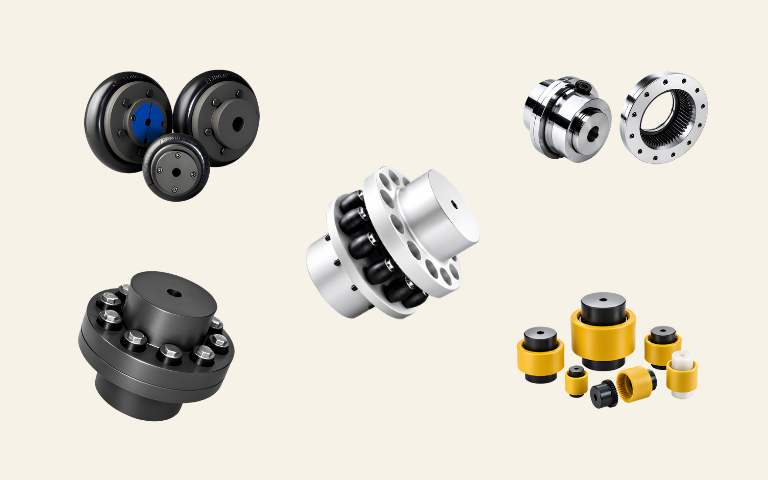
Labdhi Engineering Co. offers a range of industrial coupling options, including Fenaflex tyre couplings, Fenner gear couplings, HRC couplings, jaw couplings, Lovejoy couplings, nylon gear couplings and pin-bush couplings.
What Is an Industrial Coupling?
An industrial coupling is a mechanical device used to connect two shafts and transmit rotational power from one shaft to another.
Couplings are commonly used between components such as:
- Electric motors and pumps
- Motors and gearboxes
- Gearboxes and driven machinery
- Conveyors
- Compressors
- Industrial processing equipment
- General power transmission systems
The coupling selected for a machine depends on how the connected equipment operates.
A rigid connection may not be appropriate where some shaft movement or misalignment can occur. In such applications, a suitable flexible coupling can provide additional mechanical flexibility.
Why Is Coupling Selection Important?
Choosing an unsuitable coupling can affect the performance of the connected equipment.
Important considerations include:
- Power transmission requirements
- Shaft diameter
- Operating speed
- Torque
- Shaft alignment
- Space available for installation
- Environmental conditions
- Maintenance requirements
- Type of connected machinery
The coupling should therefore be selected according to the complete application rather than simply by looking at its physical size.
Common Types of Industrial Couplings
Different coupling designs address different power-transmission requirements. Labdhi’s current coupling category includes several types.
1. Tyre Couplings
Tyre couplings use a flexible tyre element between the connected hubs.
The flexible element allows the coupling to accommodate certain shaft misalignment and provides torsional flexibility.
They can be considered for applications where flexibility and vibration-related considerations are important.
Labdhi lists Fenaflex Tyre Couplings and Fenner tyre coupling products within its coupling range.
2. Gear Couplings
Gear couplings use gear teeth to transmit torque between connected shafts.
They are used in industrial power-transmission applications where a robust coupling arrangement is required.
Labdhi’s coupling range includes Fenner Gear Couplings as well as nylon gear coupling options.
3. HRC Couplings
HRC couplings are flexible couplings designed around an elastic element positioned between coupling hubs.
The design makes them relevant for various general industrial power-transmission applications.
When selecting an HRC coupling, the machine’s torque, speed, shaft dimensions and operating conditions should be considered.
4. Jaw Couplings
Jaw couplings use hubs and an elastomeric element positioned between them.
Their construction makes them useful for applications requiring a compact coupling arrangement.
The elastomer also provides flexibility within the coupling system.
Labdhi lists Jaw Couplings among its available coupling products.
5. Pin Bush Couplings
Pin-bush couplings use pins and flexible bushes to transmit torque between two flanged hubs.
Labdhi’s Fenner coupling pin-bush product is described as using resilient barrel-shaped bushes with pins and nuts and two flanged hubs of graded cast iron. The product information also states that the bushes permit misalignment in multiple directions and provide torsional flexibility.
These characteristics make pin-bush coupling designs relevant to general engineering applications where shaft misalignment may occur.
6. Lovejoy Couplings
Lovejoy couplings are another coupling category available through Labdhi.
Their selection should be based on the machinery configuration, shaft size, torque and operating conditions rather than brand name alone.
Key Factors When Selecting an Industrial Coupling
1. Determine the Application
Start by understanding what the coupling will connect.
For example, a coupling between a motor and pump may have different requirements from one used between a motor and gearbox.
Identify:
- Driving equipment
- Driven equipment
- Power source
- Operating cycle
- Load characteristics
- Installation arrangement
2. Check Shaft Diameter
The coupling must be compatible with the shaft dimensions of the connected equipment.
Before ordering, confirm:
- Shaft diameter
- Bore requirements
- Keyway dimensions
- Hub dimensions
- Available installation space
Incorrect shaft information can result in an unsuitable coupling selection.
3. Consider Torque
Torque is an important factor in coupling selection.
The coupling must be capable of handling the torque generated by the application under its operating conditions.
Where machinery experiences starting loads, shock loads or changing loads, these conditions should also be communicated to the supplier.
4. Consider Operating Speed
Rotational speed can influence coupling selection.
A coupling intended for one operating speed range may not be appropriate for another application.
Therefore, provide the operating RPM when requesting a coupling.
5. Evaluate Shaft Alignment
Shafts are not always perfectly aligned.
Depending on the machine and installation, there may be:
- Angular misalignment
- Parallel or radial misalignment
- Axial movement
Flexible coupling designs can accommodate certain types of misalignment, but the allowable limits depend on the specific coupling.
6. Check the Operating Environment
The environment around the coupling can also influence selection.
Consider whether the equipment operates in conditions involving:
- Dust
- Moisture
- Heat
- Chemicals
- Oil or grease
- Outdoor exposure
The coupling construction and flexible elements should be suitable for the actual operating environment.
7. Consider Installation and Maintenance
Accessibility is another practical consideration.
A coupling that is difficult to inspect or replace can increase maintenance effort.
Before selection, consider:
- Installation space
- Accessibility
- Replacement procedure
- Availability of replacement elements
- Routine inspection requirements
Industrial Applications of Couplings
Industrial couplings are used across many mechanical power-transmission systems.
Typical application areas can include:
- Pumps
- Motors
- Gearboxes
- Conveyors
- Compressors
- Material-handling equipment
- General engineering machinery
- Industrial processing machinery
The exact coupling type should be selected according to the requirements of the individual machine.
Coupling Selection Checklist
Before approaching an industrial coupling supplier, prepare the following information:
| Requirement | Information to Provide |
|---|---|
| Application | Machine or equipment where coupling will be used |
| Motor power | Motor rating |
| Speed | Operating RPM |
| Torque | Required or calculated torque |
| Shaft | Shaft diameter and configuration |
| Bore | Required bore size |
| Alignment | Expected shaft alignment condition |
| Environment | Temperature, dust, moisture or chemicals |
| Space | Available coupling dimensions |
| Duty | Continuous, intermittent or variable operation |
Providing complete information helps the supplier identify suitable options more efficiently.
Why Work With an Industrial Coupling Supplier?
Industrial buyers often need more than simply a coupling name.
A supplier can help identify the appropriate product based on the machinery details supplied by the customer.
For procurement teams, important considerations include:
- Product availability
- Correct dimensions
- Application suitability
- Brand requirements
- Replacement availability
- Quantity requirements
- Delivery requirements
- Technical information
Labdhi Engineering Co. is based in Masjid Bandar, Mumbai, and supplies a broad range of industrial products alongside its coupling range.
Frequently Asked Questions
What is an industrial coupling?
An industrial coupling is a mechanical component used to connect two shafts and transmit rotational power between them.
How do I choose the right coupling?
Start with the application, shaft diameter, torque, operating speed, alignment, environmental conditions and installation requirements.
Are all industrial couplings flexible?
No. Coupling designs differ in construction and operating characteristics. Some provide flexibility and accommodate certain misalignment conditions, while others have different mechanical arrangements.
What information should I provide when buying a coupling?
Provide the machine application, motor power, RPM, shaft diameter, torque requirements, alignment information and operating environment.
Where are pin-bush couplings used?
Pin-bush couplings can be used in general engineering and industrial power-transmission applications. Labdhi’s Fenner pin-bush product specifically describes its suitability for general engineering applications where shaft misalignment may occur.
Conclusion
Selecting an industrial coupling should be based on the requirements of the complete power-transmission system. Shaft size, torque, speed, alignment, operating environment and maintenance considerations all play a role in choosing a suitable coupling.
With options including tyre, gear, HRC, jaw, Lovejoy, nylon gear and pin-bush couplings, buyers can evaluate different coupling designs according to their machinery requirements.
For industrial coupling requirements, buyers can share their application details, shaft dimensions and operating conditions with Labdhi Engineering Co. to identify the appropriate product for their equipment.